October 6, 2026
Investing in a reliable parking lot paving service ensures your commercial property remains safe, visually appealing, and accessible to customers. A well-maintained asphalt parking lot is one of the very first things a client or visitor notices upon arrival. Beyond immediate curb appeal, an expertly constructed surface prevents costly vehicular damage, mitigates liability risks, and provides structural longevity under heavy daily traffic. However, for property managers and business owners, undergoing a complete paving installation or full-scale repaving effort can feel like a daunting logistical challenge. Understanding the multi-stage progression of a commercial paving project helps demystify the timeline, allowing you to prepare your property and minimize downtime for daily business operations. From ground assessment to the application of crisp traffic lines, every step requires specialized machinery, technical precision, and experienced project management.
Initial Evaluation and Site Assessment
Every successful commercial paving operation begins long before heavy machinery arrives on the property. The opening stage involves a comprehensive, on-site assessment to diagnose underlying vulnerabilities, structural failures, and environmental conditions. Professional contractors conduct a thorough walkthrough of the existing surface, examining subbase stability, current soil composition, standing water patterns, and deep-set cracking patterns. During this phase, core samples may be taken to evaluate the thickness and load capacity of the existing asphalt and underlying crushed stone.
Furthermore, contractors analyze traffic volume, turning radii, and high-load zones, such as truck delivery dock approaches, to determine the precise asphalt mix and thickness requirements for the site. Drainage paths are thoroughly surveyed to identify where rainwater naturally collects and whether existing catch basins require repair or replacement. Identifying potential structural weaknesses early prevents future surface buckling, premature cracking, and unexpected project delays. During the initial phase, a professional parking lot paving service will conduct a thorough walkthrough to identify structural risks before equipment arrives.
Strategic Planning and Permitting
Once the physical assessment is complete, the project moves into the strategic planning and administrative phase. Commercial paving projects must adhere strictly to local municipal zoning codes, environmental runoff mandates, and national regulations, such as the Americans with Disabilities Act (ADA). Obtaining proper permits is essential to ensure compliance with local rainwater management laws and property setback rules.
In addition to legal permitting, this phase focuses heavily on logistical coordination. A major concern for commercial property owners is maintaining business continuity while heavy construction takes place. Contractors work closely with site management to create a phased paving plan. By dividing the parking lot into designated zones, portioning traffic flow, and setting up temporary directional signage, businesses can remain open and operational throughout construction. Establishing clear communication timelines ensures tenants, staff, and visitors know where to park while work progresses smoothly. Partnering with an experienced parking lot paving service helps streamline the permitting process and minimizes operational downtime for your business.
Surface Preparation and Excavation
With permits secured and logistics planned, physical field work begins with surface preparation and excavation. For new construction or complete reconstruction projects, this step involves removing old asphalt, concrete, overgrown vegetation, and topsoil down to a specific design depth. Heavy machinery—such as milling machines, excavators, and dump trucks—is brought on-site to demolish damaged pavement and haul away organic debris.
Proper depth excavation is critical because asphalt relies entirely on the subgrade beneath it to bear weight. If soft soil, clay pockets, or waterlogged subgrade are discovered during excavation, contractors perform subgrade stabilization. This may involve undercutting problematic soil zones and replacing them with aggregate or geotextile stabilization fabrics. Debris management and proper grading occur concurrently to ensure the exposed earth is level and properly sloped toward designated runoff areas. Proper ground clearing by a skilled parking lot paving service guarantees that the underlying soil can handle heavy commercial vehicles.
Subbase Installation and Compaction
The subbase layer serves as the structural foundation of your entire parking lot, bearing the load of every passenger car, delivery truck, and garbage collector that traverses the surface. Without a properly installed aggregate base, even top-tier asphalt will quickly sag, crack, and develop deep potholes. During this phase, aggregate stone—typically crushed limestone or recycled concrete—is spread evenly across the excavated area and graded with precision.
Once spread, heavy vibratory rollers roll over the stone to achieve high compaction density. Compaction locks the stone particles together, forming a rigid base resistant to freeze-thaw cycles and ground settling. Quality drainage relies heavily on this layer as well, as a solid subbase allows moisture to disperse safely without saturating the surrounding earth. According to This Old House, asphalt can endure extreme temperatures that heat the surface as high as 150 degrees Fahrenheit, but only if supported by a properly compacted subbase layer. A solid subbase allows the asphalt surface above to expand and contract under severe seasonal heat without undergoing underlying structural failure.
Hot-Mix Application and Smooth Rolling
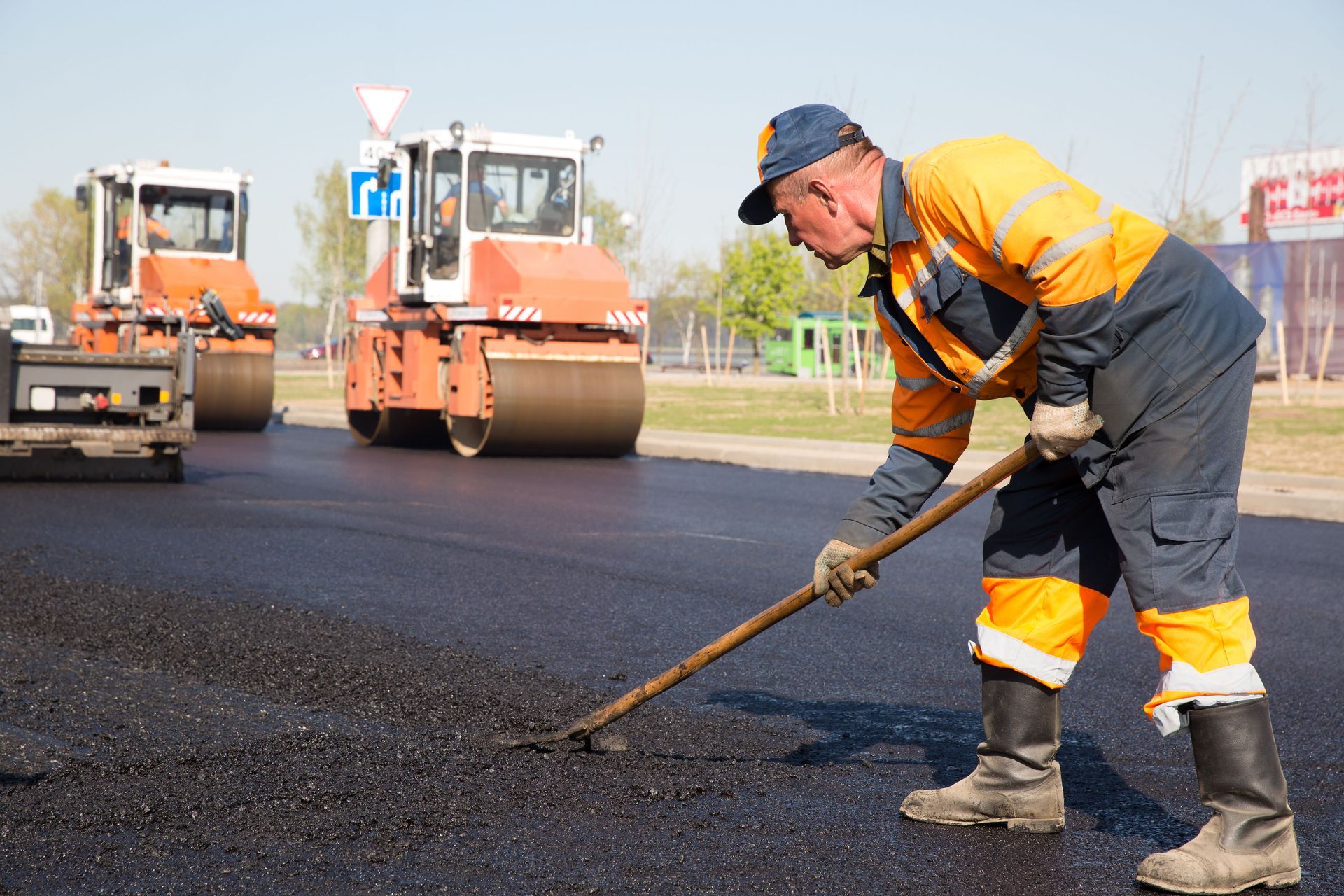
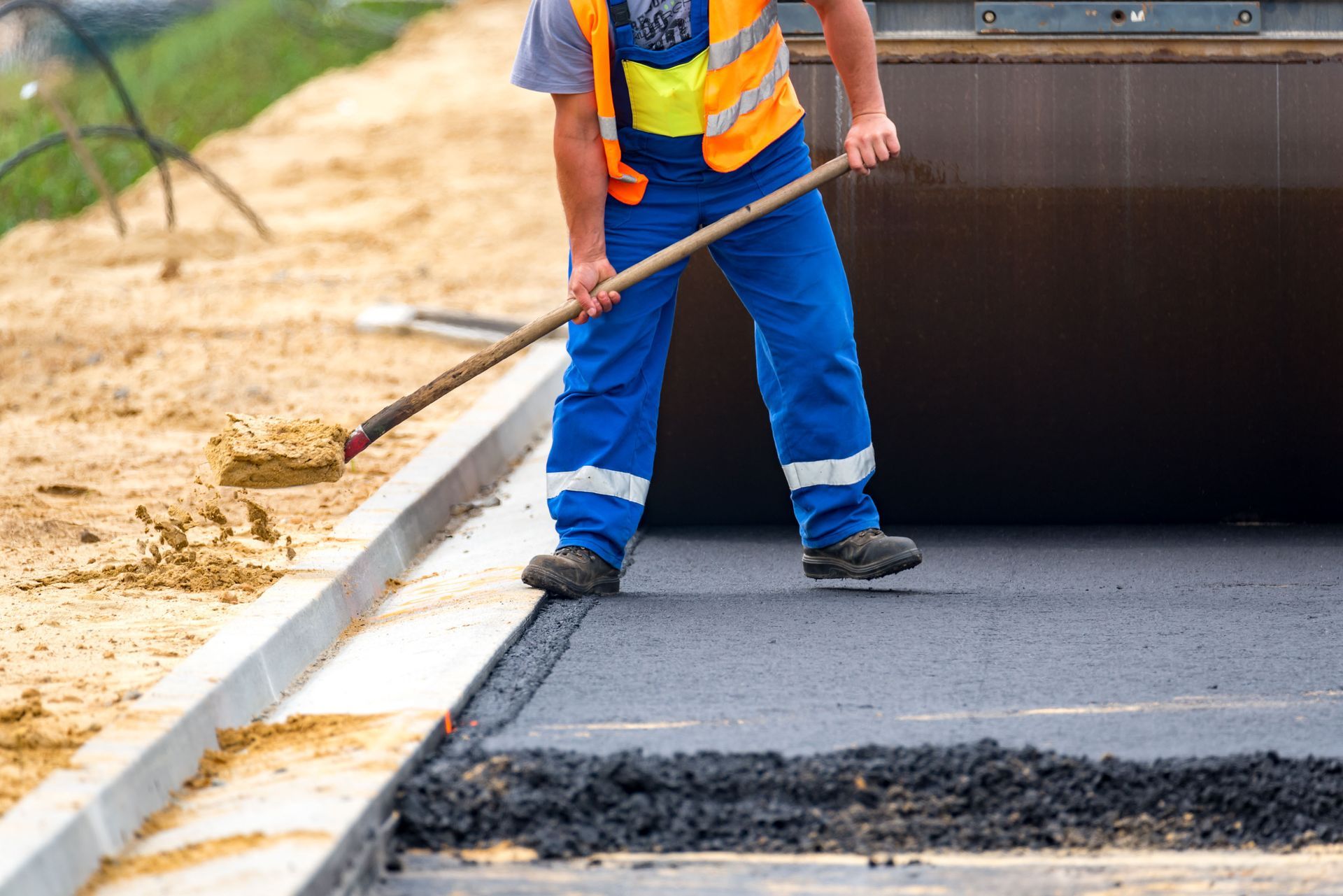
Once the base layer passes inspection and compaction testing, the hot-mix asphalt application begins. The asphalt arrives at the job site in insulated dump trucks directly from the local batch plant, maintained at elevated temperatures. The hot asphalt is transferred into specialized paving equipment, which lays down the material in smooth, consistent layers known as "lifts."
In commercial paving, installation typically involves two primary layers: a binder course composed of larger aggregates for structural strength, and a wearing course made of smaller aggregates for a smooth, water-resistant top surface. As the paver lays the hot mix, roller operators immediately begin compaction rolling while the material remains within optimal temperature ranges. Smooth, uniform rolling eliminates air voids, binds the asphalt aggregate together, and creates a seamless finish. Precision temperature control during application is why hiring a dedicated parking lot paving service is essential for long-lasting structural integrity.
Drainage Calibration and Slope Fine-Tuning
Standing water is asphalt's primary enemy. Moisture that penetrates asphalt seams degrades the binder, weakens the subbase, and creates devastating winter potholes. Therefore, during and immediately following the asphalt laydown, paving crews perform meticulous drainage calibration and slope fine-tuning to guarantee optimal water runoff.
Using transit lasers and digital levels, crews confirm that the asphalt surface maintains a minimum pitch directed precisely toward catch basins, retention ponds, or municipal storm drains. Transitional areas around existing drainage structures, curbs, and gutters are hand-tamped and sealed to prevent water penetration along perimeter seams. Paving teams also verify that low spots, known as birdbaths, are fully eliminated before the hot mix cools completely. A reputable parking lot paving service engineered slopes carefully to keep standing water from compromising the asphalt's lifespan.
Line Striping and ADA Compliance Marking
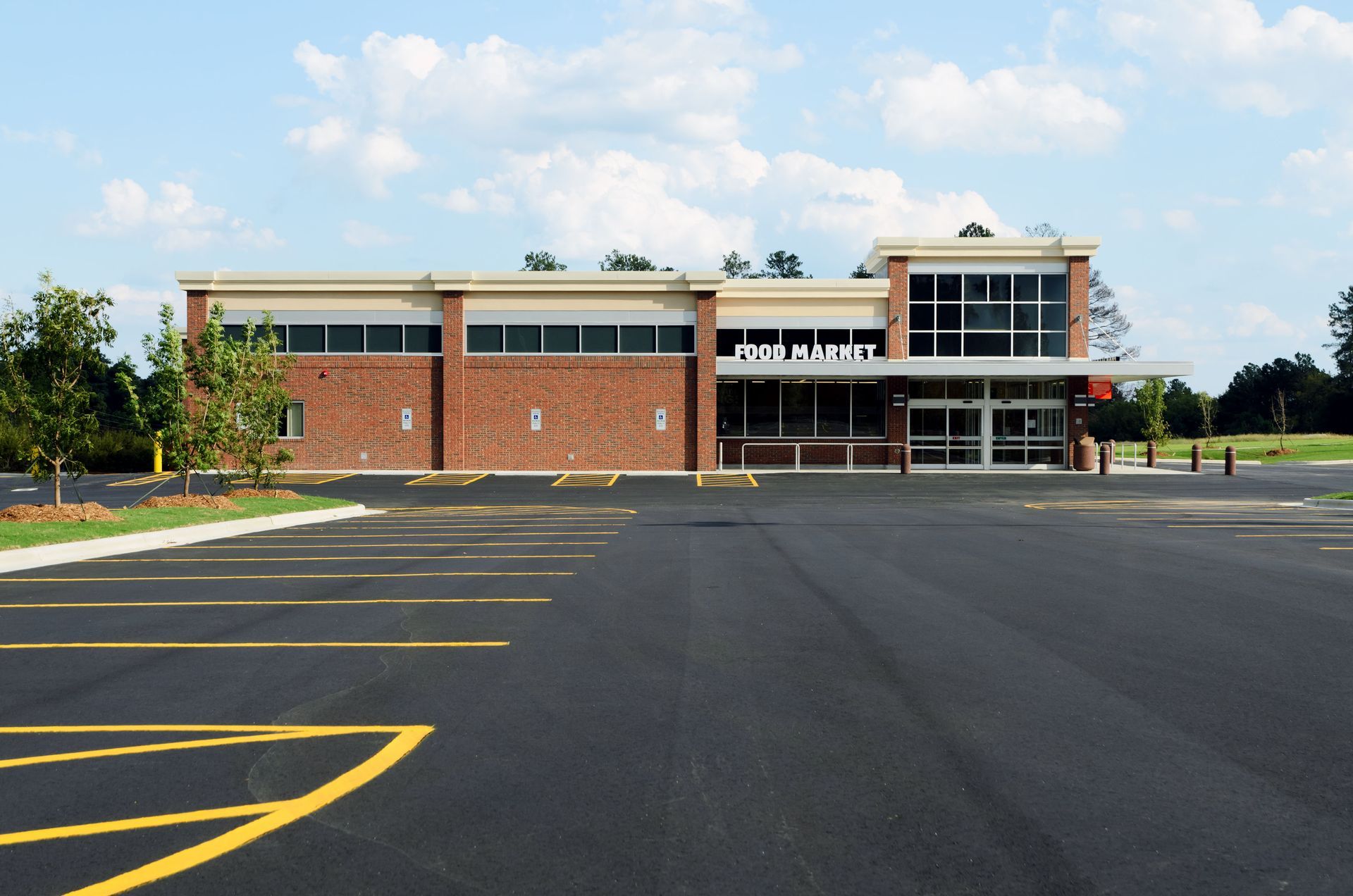
After the newly laid asphalt has cooled and hardened sufficiently, the project transitions to visual marking and traffic layout. Professional line striping transforms a newly paved asphalt pad into a functional, organized, and legal commercial parking lot. Commercial paint striping machines apply quick-drying, high-visibility acrylic or thermoplastic traffic paints.
Crews mark individual parking stalls, directional arrows, loading zone crosshatches, fire lanes, and pedestrian walkways. ADA compliance is rigorously integrated during this stage, ensuring designated handicap-accessible stalls feature the required dimensions, clear access aisles, and blue-and-white symbol markings. Accurate striping optimizes parking space capacity, guides traffic flow safely, and ensures your property avoids non-compliance penalties. After the pavement cures sufficiently, the parking lot paving service applies sharp, reflective striping to maximize stall capacity and safety.
A successful commercial paving project is a carefully orchestrated sequence involving thorough site evaluation, precise excavation, deep base compaction, specialized asphalt application, and crisp safety striping. By taking a proactive approach and understanding each stage of the construction process, business owners can protect their structural investment and minimize disruptions to daily business operations. Choosing a dependable
parking lot paving service transforms your commercial property with a durable, smooth surface built to perform for decades.
Ready to upgrade your property's curb appeal and functionality? Contact the experts at Dagg’s Asphalt & Sealcoating today to schedule your comprehensive site assessment and estimate. Let us deliver a high-quality parking lot designed to withstand heavy traffic and harsh elements.